
Quick Facts — AI Scams & Real Estate in 2026
- Deepfake scams are up 40% year-over-year (2026 Identity Fraud Report, Entrust)
- AI-driven fraud losses projected to reach $40 billion by 2027 (Deloitte)
- Wire fraud is the #1 financial crime in real estate transactions
- AI can now clone a voice from as little as 3 seconds of audio
- 4 major scam types targeting sellers: deepfakes, synthetic personas, title fraud, AI phishing
In This Article
- Scammers Can Clone Voices and Create Fake Video Calls
- Fake Buyers With Complete Identities Are Targeting Sellers
- Your Title and Deed Can Be Forged With AI
- That “Urgent” Email Might Not Be From Your Agent
- What Your Agent Should Be Doing to Protect You
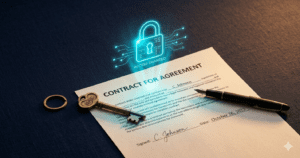
Real Estate AI Scams are not a scare piece. They ARE happening and you need to be prepared. I’m Connie Betz, a real estate agent in Omaha, Nebraska — Douglas County and Sarpy County — and I’ve been helping sellers navigate transactions for 20 years through BetterWithBetz. Published April 2026.
I’m not writing this to make you nervous about selling your home. I’m writing it because the scam landscape has changed so fast in the last 18 months that most sellers — and frankly, most agents — haven’t caught up. The data is clear: deepfake scams are up 40% year-over-year, and AI-driven fraud losses are projected to hit $40 billion by 2027. That’s not a prediction from a movie. That’s Deloitte.
You deserve to know what’s out there. And you deserve an agent who’s already doing something about it. If you’re selling in the Omaha metro area, here’s what Connie Betz wants you to know.
“At Better with Betz, every client is screened. Not because I don’t trust you — because I don’t trust the people pretending to be you.”
Here are five things every seller should know heading into a transaction in 2026.
1. Scammers Can Now Clone Voices and Create Fake Video Calls
This one gets people’s attention, and it should. AI-generated deepfakes — fake audio and video that look and sound like real people — are up 40% over last year. A scammer can take a few seconds of someone’s voice from a social media video, a voicemail, even a podcast guest appearance, and create a convincing fake.
What does that mean for sellers? It means the “buyer’s agent” who calls to confirm wire transfer details might not be a real person. The “lender” who sends a video message confirming loan approval might be entirely fabricated. These aren’t obvious fakes with robotic voices anymore. They’re good. Really good.
What to do:
Never confirm financial details based on a phone call or video alone. Always verify through a second channel — if someone calls, hang up and call back using a number you already have on file. If you get a video message, confirm it by calling the person directly.

2. Fake Buyers With Complete Identities Are Targeting Sellers
This is the one most sellers have never heard of: synthetic personas. Scammers use AI to build entire fake identities — complete with credit histories, employment records, and social media profiles. These aren’t stolen identities. They’re invented from scratch. And they’re being used to make offers on real property.
The play works like this: a synthetic buyer makes an offer, the seller accepts, and the “buyer” manipulates the process to redirect funds — earnest money, wire transfers, closing costs — before anyone catches it. By the time the fraud is discovered, the money is gone.
What to do:
Work with an agent who verifies every party in the transaction. At Better with Betz, I screen everyone who touches your deal — not because it’s convenient, but because it’s necessary.
3. Your Title and Deed Can Be Forged With AI
Title fraud isn’t new and AI has it made it even easier for scammers. Forged deeds, fake notarizations, convincing replicas of county documents — AI tools can generate these in minutes. A scammer impersonates a property owner, files a forged deed, and sells or refinances the property before the real owner even knows it happened.
This hits sellers especially hard. If you own a property you don’t live in — a rental, a second home, vacant land — you’re a higher-risk target because you’re less likely to notice unusual activity at the property.
What to do:
Set up property alerts on your address with Google. Some county assessor’s offer free notifications any time a document is filed against your property so call and see if this service is available. If you own investment property or land, this is not optional — do it today. Also: title insurance isn’t just paperwork. It’s protection you don’t want to skip.
4. AI Phishing: That "Urgent" Email From Your Agent Might Not Be From Your Agent
Wire fraud is already the number one financial crime in real estate. AI has made it easier. Scammers use AI to write phishing emails that are nearly indistinguishable from the real thing — correct formatting, accurate transaction details, your actual agent’s name and email signature. No more broken English and obvious typos. These emails look legitimate because AI made them legitimate-looking.
The most common version: you get an email that appears to be from your title company or agent with “updated” wire instructions right before closing. You wire your down payment or proceeds to the new account. Except the new account belongs to a scammer. And wire transfers are nearly impossible to reverse.
What to do:
Here’s my rule, and I tell every client: never wire money based on email instructions alone. If you receive wire instructions — even from an email address that looks like mine — call me directly at a number you already have. Don’t use the number in the email. Don’t click any links. Pick up the phone and verify. Every single time.
5. What Your Agent Should Be Doing to Protect You
Here’s where this stops being scary and starts being empowering. Because the truth is: most of these scams work because no one was watching. The technology is sophisticated, but the prevention doesn’t have to be. It requires an agent who takes security seriously and has a process in place before the listing goes live.
At Better with Betz, here’s what I do for every seller:
What This Means for Sellers
MY SECURITY PROCESS
Identity verification: Every buyer, agent, and third party involved in your transaction is verified. No exceptions.
Secure communications: Wire instructions are confirmed verbally, never solely by email. I establish a verification code word with every client at the start of the transaction.
Transaction monitoring: I watch for red flags throughout — unusual urgency, inconsistent details, last-minute changes to closing procedures.
Client education: You get a security briefing before we list. Not a 30-page document — a conversation about what to watch for and what to do if something feels off.
Over-communication: I’m the agent that over-communicates — not the one that disappears on you. If something changes in your transaction, you hear it from me first, directly.
This isn’t extra. This is the baseline. If your agent isn’t doing these things, ask them why.
“It’s not time to panic until I tell you it’s time to panic. In 20 years, I’ve never had to make that call. But I’ve also never stopped watching.”
How to Stay Ahead of Real Estate AI Scams
AI scams in real estate are not a future problem. They’re a right-now problem. But here’s what I want you to take away from this: you are not helpless. You don’t need to be a tech expert. You need to know what to watch for, and you need an agent who’s already watching.
When you work with me at Better with Betz, you get me — not pawned off on somebody else. Someone who knows what’s happening in your transaction and is actually protecting you while getting your house sold.
My data is my advantage. My diligence is yours.
Frequently Asked Questions
How common are AI scams in real estate in 2026?
More common than most people realize. Deepfake scams are up 40% year-over-year according to the 2026 Identity Fraud Report from Entrust. AI-driven fraud losses across all industries are projected to hit $40 billion by 2027 (Deloitte). Real estate is a prime target because transactions involve large wire transfers and multiple parties — creating more opportunities for impersonation and interception.
What is the most dangerous AI scam targeting home sellers?
Wire fraud remains the number one financial crime in real estate, and AI has supercharged it. Scammers use AI to create convincing phishing emails that mimic your agent’s or title company’s formatting, signature, and transaction details. The goal: trick you into wiring closing proceeds or earnest money to a fraudulent account. Always verify wire instructions by calling a known phone number — never trust email alone.
How can I protect myself from real estate fraud when selling my home?
Three things: (1) Verify everything through a second channel — if you get wire instructions by email, confirm by phone using a number you already have. (2) Set up property alerts with your county recorder’s office so you’re notified of any filings against your property. (3) Work with an agent who screens every party in the transaction and has a documented security process. Ask your agent what they do to protect you — if they can’t answer specifically, that’s a red flag.
Can AI really fake a phone call from my real estate agent?
Yes. AI voice cloning technology can replicate a person’s voice from as little as a few seconds of audio — pulled from social media, voicemail, or public recordings. This means a scammer could call you sounding exactly like your agent and give you fraudulent instructions. The defense: establish a verification code word with your agent at the start of your transaction. If they can’t provide it, hang up and call them directly.
What should I look for in an agent to make sure my transaction is secure?
Ask them: How do you verify the identity of buyers and other parties? How do you handle wire transfer instructions? Do you use a code word system? Do you provide a security briefing before listing? A good agent in 2026 should have clear, specific answers to all of these. If they look at you blankly, keep looking. Security isn’t optional — it’s part of the service.
What is a code word system and how does it protect me?
A code word is a unique phrase you and your agent agree on at the start of your transaction. Any time financial instructions are given — wire details, payment changes, closing updates — the code word must be provided. If someone calls claiming to be your agent or title company and can’t give the code word, you hang up and call the verified number directly. It’s simple, free, and stops most impersonation scams cold.
Are Omaha home sellers being targeted by AI scams?
Yes. AI scams are not limited to coastal or high-value markets. Any real estate transaction involving wire transfers is a target, and Omaha’s active market — particularly in Douglas County and Sarpy County where homes sell quickly — creates exactly the kind of fast-moving environment scammers exploit. The urgency of a closing timeline is what they count on.
How do I verify wire transfer instructions are legitimate?
Never trust wire instructions received by email alone — even if the email looks exactly right. Call your title company using a phone number you obtained independently (from their website or your original paperwork, not from the email). Confirm the routing number and account number verbally before sending any money. One phone call can save you your entire closing proceeds.
Does title insurance protect against AI fraud?
Title insurance protects against ownership disputes and liens discovered after closing — it’s essential but not a complete shield against AI fraud. Wire fraud, deepfake impersonation, and phishing happen during the transaction, before title insurance kicks in. You need both: title insurance for post-closing protection AND active security measures (code words, verification calls, agent screening) during the transaction itself.
What should I do if I think I’ve been targeted by a real estate scam?
Act immediately. Contact your bank and request a wire recall — time is critical, as funds can be moved within hours. File a report with the FBI’s Internet Crime Complaint Center (IC3) at ic3.gov. Notify your real estate agent, title company, and local law enforcement. Do not delete any emails or messages — they’re evidence. The faster you act, the higher the chance of recovering funds.
Ready to Sell With an Agent Who’s Watching Your Back?
Berkshire Hathaway HomeServices Ambassador Real Estate
About Connie Betz
Connie Betz is a licensed Realtor with 20 years of experience and over 200 homes sold in the Omaha metro area. She specializes in helping sellers and buyers navigate the Omaha market with data-driven analysis and straightforward advice. Certifications: CNHS, RCC, RIS. Licensed in Nebraska and Iowa. Berkshire Hathaway HomeServices Ambassador Real Estate.